
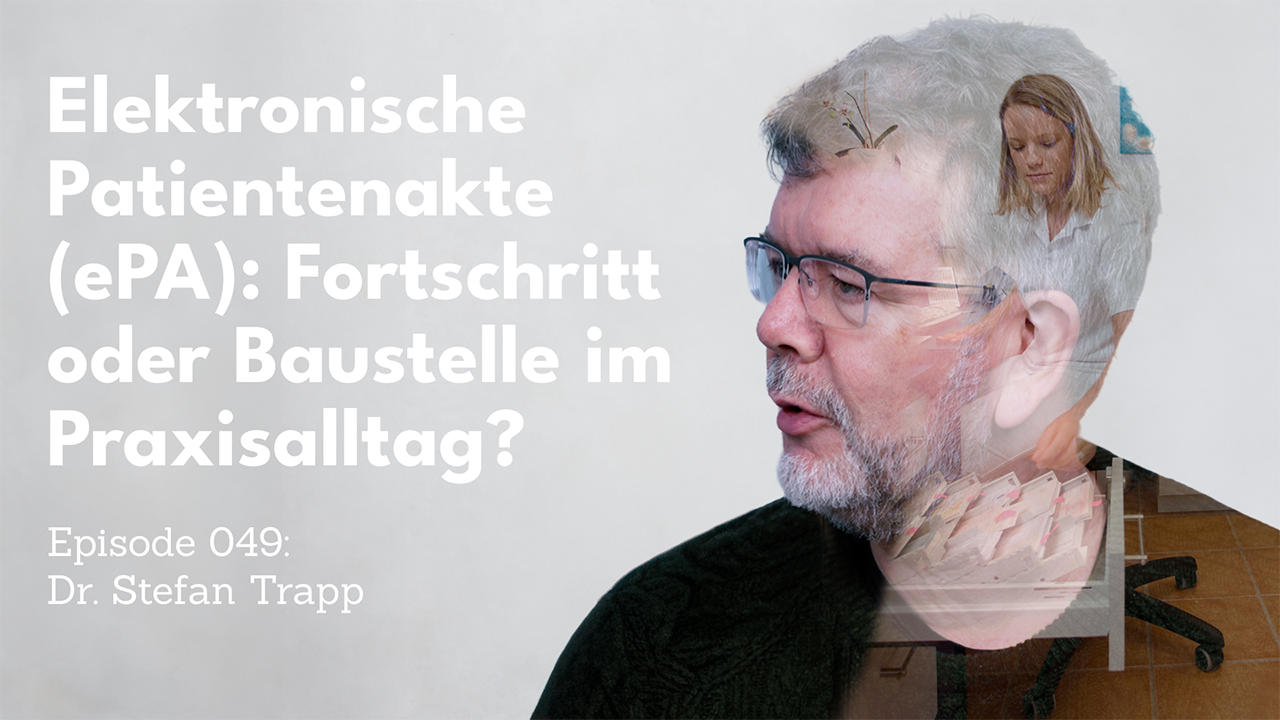
Host Rasmus Cloes speaks with Dr. Stefan Trapp on the Digital Public Health Podcast about electronic health records (eHR) and the question of whether they truly improve everyday practice—or create new problems.
Electronic health records have been part of everyday healthcare for about a year now. At a large pediatric practice in Bremen, it’s clear that technically, the ePA works surprisingly reliably. Documents can be uploaded, lab results shared, and prescriptions tracked. Especially for chronically ill children, the electronic patient record can help make complex medical histories more quickly accessible and avoid duplicate tests.
At the same time, structural weaknesses are becoming apparent. Many clinics are not yet consistently connected; doctor’s notes still arrive by mail, and PDFs cannot be searched. The ePA thus often becomes a digital file folder rather than an intelligent information system. A powerful search function, standardized entries, and true interoperability remain key areas for improvement.
The issue of data sovereignty for children and adolescents is particularly sensitive. Starting in adolescence, they can manage their electronic health records themselves, but in practice, many families are largely unaware of their rights. Topics such as contraception, mental health conditions, or child welfare raise complex questions: How do you protect adolescents’ privacy when parents have formal access? And how do you prevent sensitive diagnoses from being inadvertently disclosed?
At the same time, the ePA holds enormous potential for prevention and research. Electronic vaccination registries, digital well-child checkup records, or structured preventive care data could reveal gaps in care and enable systematic analysis of health trends. Much of this data is already being collected but not systematically utilized. The electronic patient record could represent a paradigm shift in this area over the long term.
The bottom line is a mixed picture: The ePA is a step in the right direction, but it falls short of its potential. Better care requires open interfaces, consistent integration of all stakeholders, and clear legal regulations on data protection and access rights. Then the electronic patient record can be more than just a PDF repository—namely, a genuine tool for continuity, prevention, and digital health literacy.
About Stefan Trapp
Dr. Stefan Trapp is a pediatrician in Bremen-Huchting and has been working in a large group practice for many years. He is chairman of the Representatives’ Assembly of the Bremen Association of Statutory Health Insurance Physicians and is actively involved in health policy at the state level. He is also vice president of the Professional Association of Pediatricians and is particularly committed to the rights and care of children and adolescents.
Timestamps
00:01:17:14 Introduction of ePA in everyday life
00:02:54:06 Clinics not connected
00:05:16:17 PDF instead of search function
00:15:24:24 Unused data
00:27:54:22 Adolescents & access rights
Watch/listen now and gain exciting insights: YouTube, Spotify, Apple, Dezer