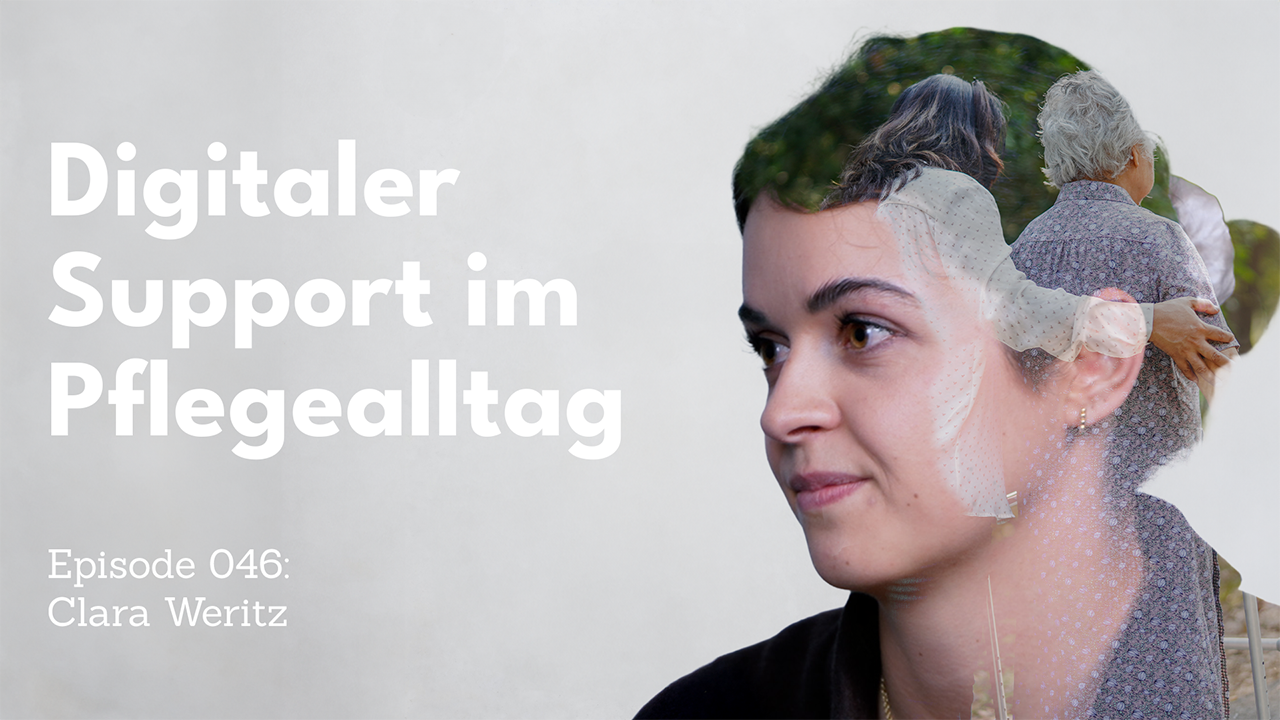
In the latest episode of the Digital Public Health Podcast, host Rasmus Cloes talks to Clara Weritz about digital assistance in home care. Weritz works at “fabel,” an app that aims to relieve the burden on relatives in everyday life, simplify organization, and pool knowledge. The conversation focuses on responsibility, excessive demands, and the question of how much technology care really needs.
In Germany, care usually takes place behind closed doors: at home, between work, family, and sleep deprivation. Millions of people care for relatives, often without professional support. Clara explains why digital solutions are needed here: not as a substitute for human contact, but as a tool to combat chaos and overload.
Clara explains how “fabel” structures care. Appointments, medication reminders, task distribution, knowledge gathering—everything should come together in one place. The app becomes a digital control center for families who often have to improvise. The key for them is that the application remains deliberately simple. Technology should help, not add to the burden.
One focus of the conversation is on how “fabel” is developed. Users provide feedback, test functions, and report problems. Clara describes how feedback leads to concrete improvements. It becomes clear that care cannot be standardized. Every family has different needs – and every app must respond to them.
Economic and ethical issues are also discussed. The app remains free for family members to use. It is financed through partners and campaigns. At the same time, Clara emphasizes the importance of data protection and data minimization. Sensitive information must remain protected. Trust is not a secondary issue in care, but a prerequisite.
Finally, the focus turns to the future. Rasmus and Clara discuss how digital care services could be more closely integrated with science and care in the future. This involves proof of effectiveness, political framework conditions, and long-term perspectives. Clara's goal is clear: “fabel” should become the first port of call when care suddenly becomes part of one's life.
Watch/listen now and gain exciting insights: YouTube, Spotify, Apple, Dezer